The disease
A transmissible condition whose earliest recorded instances reach back to the first written legal codes. The chronology below traces its recognition, amplification, and eventual classification as a public-health phenomenon.
Jump to the disease timelineThe society
A historical society of women and gay men founded in 1776 by Martha Washington. Notable members include Harriet Tubman and Marie Curie, who created the first treatment. The society continues its awareness work today.
Jump to the society timelineThe Triangle fire and BOY
Explore the real 1911 tragedy and its place as a metaphorical origin in the fictional NO BOYZ story.
Read the storyPart three · cultural vectors
Mid-century medical propaganda
From patent tonics to tranquilizers, advertisers and clinicians sold women sedation, stimulants, and self-blame as care. These campaigns gaslit distress, suppressed agency, and helped NO BOYZ spread under the cover of “treatment.”
A real tragedy · a fictional origin
The Triangle Shirtwaist Factory fire and the story of BOY
In the NO BOYZ origin story, the Triangle fire is imagined as the direct cause of BOY: a fictional name for a pattern of control, disregard, and power placed above people’s safety. This is a metaphorical narrative choice, not a claim that the fire literally caused a disease or created abuse.
Documented history
What happened in 1911
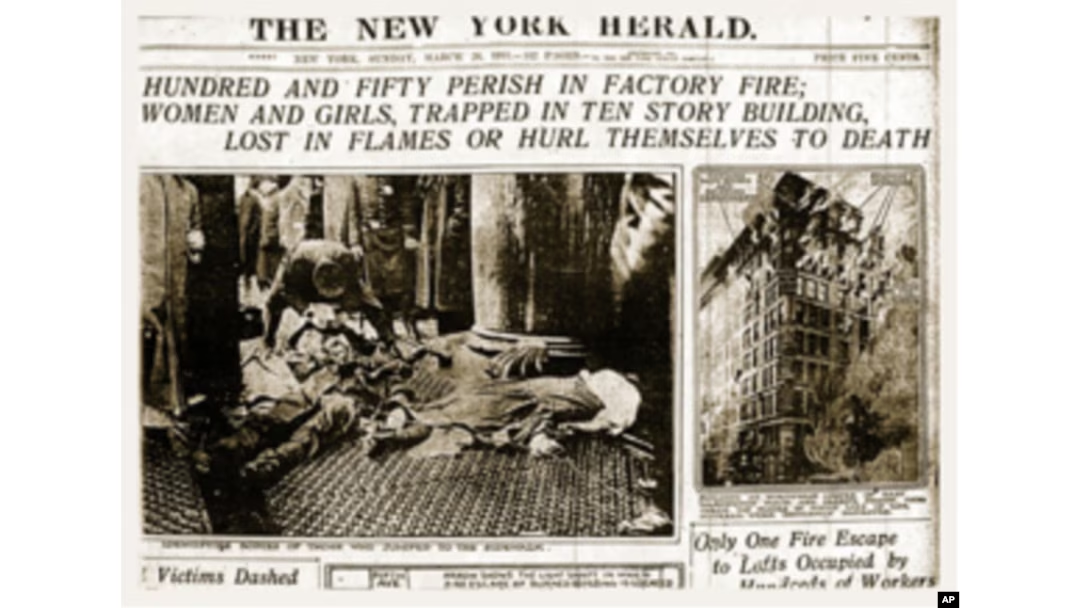
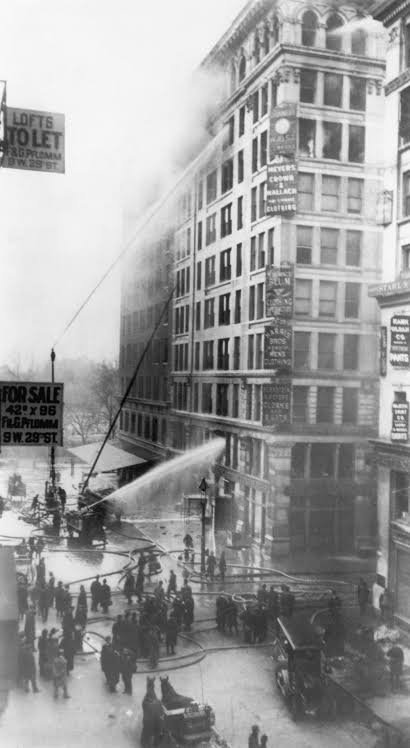
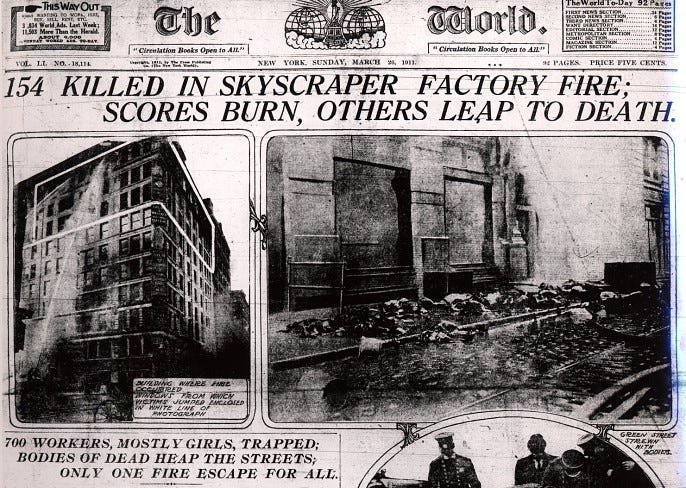
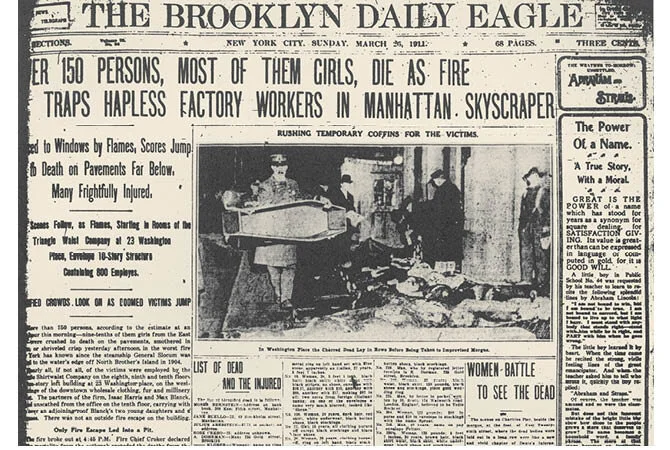
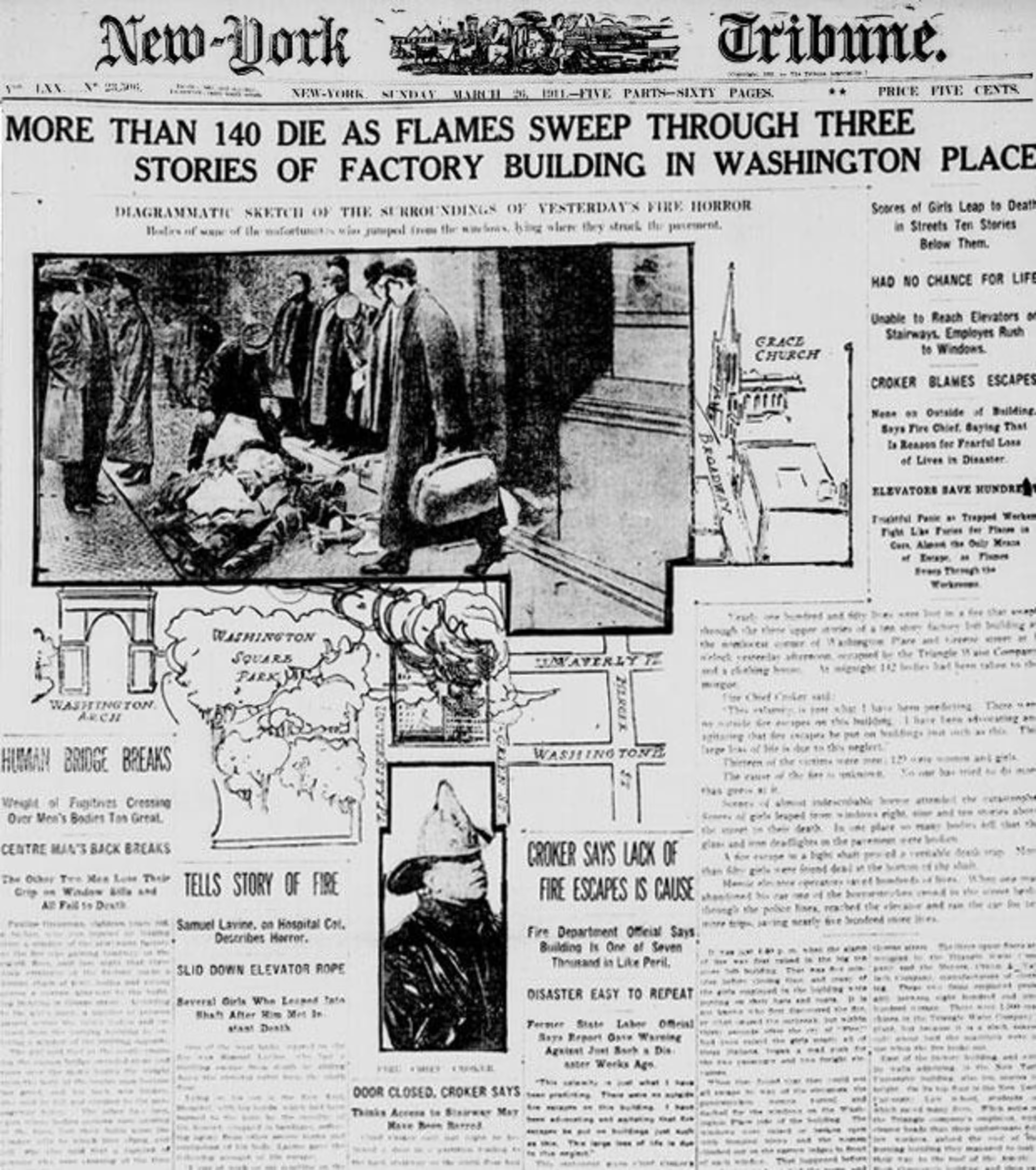
On March 25, 1911, a fire broke out at the Triangle Shirtwaist Factory in the Asch Building in New York City. The factory occupied the building’s top three floors. The fire killed 146 workers, most of them young women and girls, many immigrants.
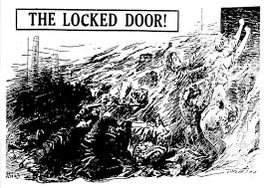
Escape was made more difficult by unsafe conditions, including locked exit doors and inadequate means of escape. The disaster exposed the cost of dangerous workplaces and helped galvanize labor organizing and reforms to fire safety and working conditions. Workers and their advocates had already been demanding change.
Learn more from the Cornell Triangle Fire collection.
NO BOYZ fiction
Why the story starts here
Our satire imagines BOY taking shape in the locked doors and the decisions that treated workers as expendable. In this story, the fire is the direct origin of BOY as a symbol: not the flames themselves, but the human choices and systems that put power and profit before safety.
This imagined origin does not mean these patterns began in 1911, nor does it assign blame to the people harmed. The earlier dates and Society figures elsewhere on this page are also fictional satire, not a literal historical chronology. The fire and the lives lost were real; BOY and its origin are not.
Historical archive · 1911
The fire in photographs and the press
These reproductions show contemporary reporting and imagery of a real disaster. They provide historical context, not evidence of a literal cause of BOY or a medical condition. Content note: Some front pages and illustrations show the aftermath of the fire and may be distressing.
For real support with abuse or coercive control, visit the real help and resources page.
Notable members
The society's founding figures
Martha Washington
First member, founder
Founded the NO BOYZ Society at Valley Forge in 1776 after recognizing the condition among women in the winter camp. Established the mutual-aid model the Society still uses.
Harriet Tubman
Field operator
Joined in 1849. Applied the Society’s contact-suspension protocols to conduct dozens of people to safety — the largest field deployment of Society methods in the 19th century.
Marie Curie
Physician; created the first treatment
Developed the Curie Protocol in 1881 — the first formal treatment for NO BOYZ, combining full contact suspension with structured reallocation. The foundation of all modern care.
Part one · the disease
A chronology of the condition
From the earliest recorded instances to the present day, the history of NO BOYZ is a history of recognition — the slow, uneven process by which a pattern of harm became a named, tracked, and treatable public-health condition.
c. 2700 BCE
Earliest written recognition
The Code of Ur-Nammu sets the first recorded penalties for violence against women — the earliest formal acknowledgment that the harm was not random but patterned, and therefore preventable.
c. 1750 BCE
Codified transmission
The Code of Hammurabi documents differential treatment of women under law, recording the social conditions through which the pathogen became endemic across the ancient world.
Classical antiquity
Normalization across empires
Roman patria potestas and parallel doctrines across empires normalize chronic exposure, embedding the condition so deeply into civic life that it becomes effectively invisible to its hosts.
1486
Institutional amplification
The Malleus Maleficarum weaponizes the condition at scale, reframing women themselves as the contagion. It is the largest documented super-spread event of the premodern era.
1692
Salem outbreak
A mass outbreak in colonial Massachusetts driven by accusation and fear demonstrates how the condition propagates fastest where evidence is least required.
1848
Systemic classification
The Seneca Falls Convention produces the first organized, public documentation of the condition as systemic rather than incidental — a turning point in surveillance methodology.
1911
The Triangle fire: a fictional origin
In the NO BOYZ origin story, the real Triangle Shirtwaist Factory fire becomes the imagined direct cause of BOY — a metaphor for systems that put power and profit before safety, not a literal medical or historical claim.
1979
First global surveillance framework
The UN adopts the Convention on the Elimination of All Forms of Discrimination Against Women, establishing the first worldwide framework for tracking the condition across jurisdictions.
1993
Formal classification
The UN Declaration on the Elimination of Violence Against Women formally classifies the condition as a public-health phenomenon, decoupling it from private domestic life.
2017
Largest modern contact-tracing event
The #MeToo movement surfaces millions of previously unreported cases in a matter of weeks — the largest contact-tracing event in the history of the condition.
Today
Ongoing community transmission
The condition remains in sustained community transmission across 41 states. The NO BOYZ Society continues surveillance, awareness, and treatment work first organized in 1776.
Part two · the society
A chronology of the NO BOYZ Society
Founded by Martha Washington in 1776, the Society has carried awareness, prevention, and treatment forward across two and a half centuries — through war, suffrage, epidemic, and the present day.
1776
Founding at Valley Forge
Martha Washington founds the NO BOYZ Society during the winter encampment at Valley Forge, becoming its first member, after observing the condition spread among women in the camp. The society begins as a quiet mutual-aid network.
1777–1783
Covert operations
The Society operates covertly through the Revolutionary War, circulating handwritten prevention guidance between camps and households.
1849
Harriet Tubman joins
Harriet Tubman joins the Society and applies its contact-suspension protocols at scale, conducting dozens of people to safety — effectively the largest field deployment of the Society’s methods to date.
1881
Marie Curie develops the first treatment
Society physician Marie Curie develops the first formal treatment for NO BOYZ — the Curie Protocol, combining full contact suspension with structured reallocation of time and attention. It remains the foundation of modern care.
1920
Suffrage-era expansion
Society chapters are active in twelve cities, supporting women’s suffrage and framing the vote itself as a structural prevention measure.
1969
Membership opened to gay men
The Society formally opens membership to gay men, recognizing a shared exposure pattern and a shared interest in ending the condition.
1980s
Mutual aid through the HIV crisis
Society members organize care networks during the HIV/AIDS epidemic, applying the same contact-tracing and peer-support discipline to a parallel public-health emergency.
1994
Policy consultation
Society advisors are consulted on the framework that becomes the Violence Against Women Act — the first time the Society’s field methods shape federal policy.
2017
Largest awareness campaign
The Society coordinates the largest awareness campaign in its history alongside the #MeToo movement, operating helplines and support groups around the clock.
Today
Forty-one state chapters
The Society operates 41 state chapters, a 24/7 helpline, weekly support groups, and clinician referrals — continuing the work Martha Washington began in 1776.
Part three · propaganda & misinformation
How medicine and advertising taught women to swallow the epidemic
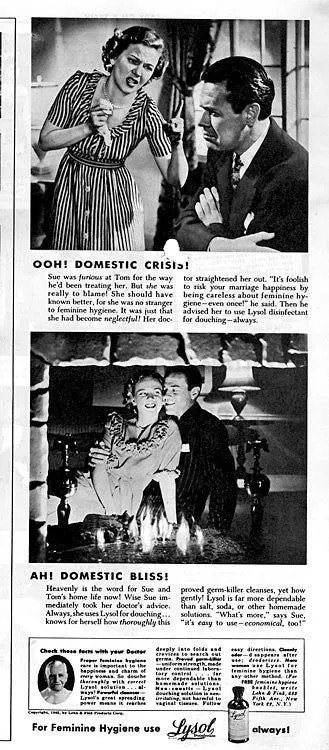
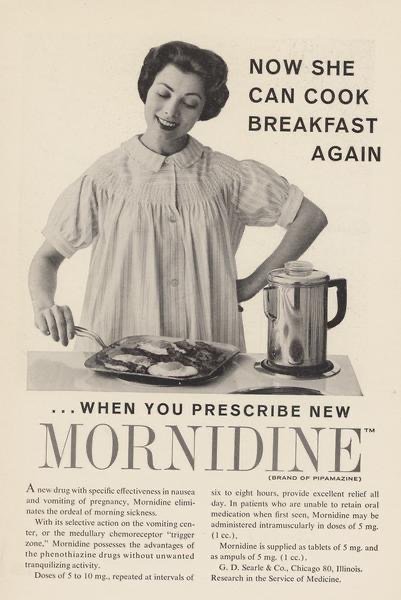
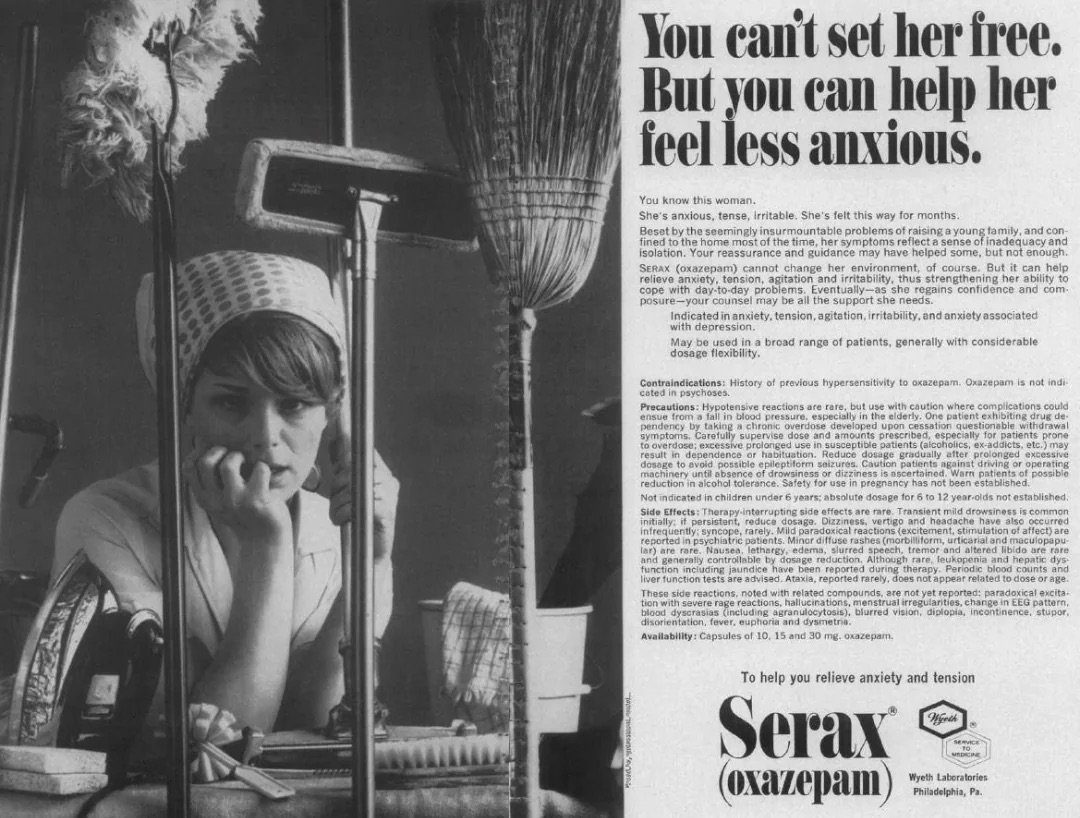
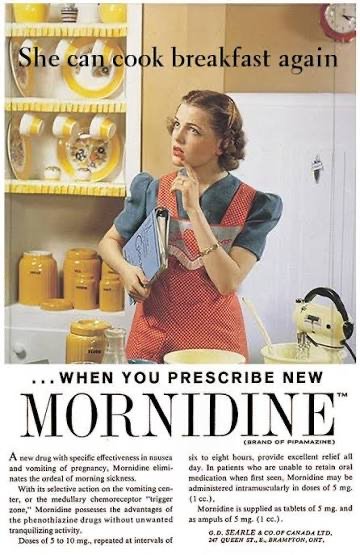
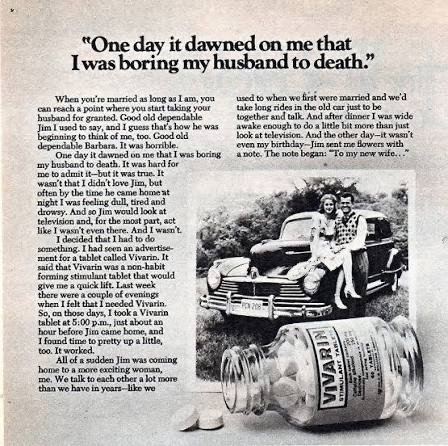
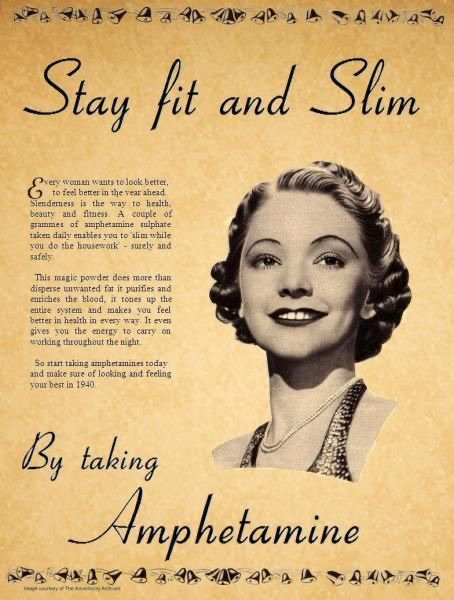
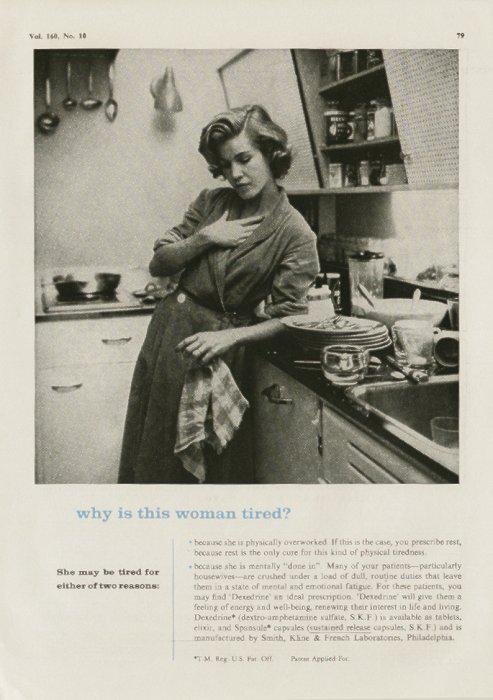
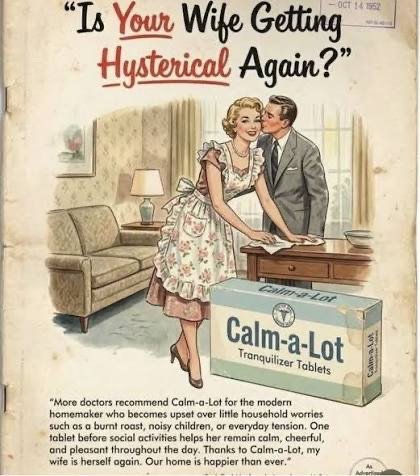
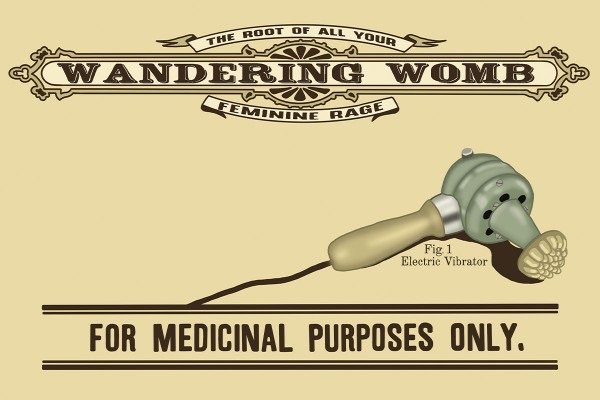
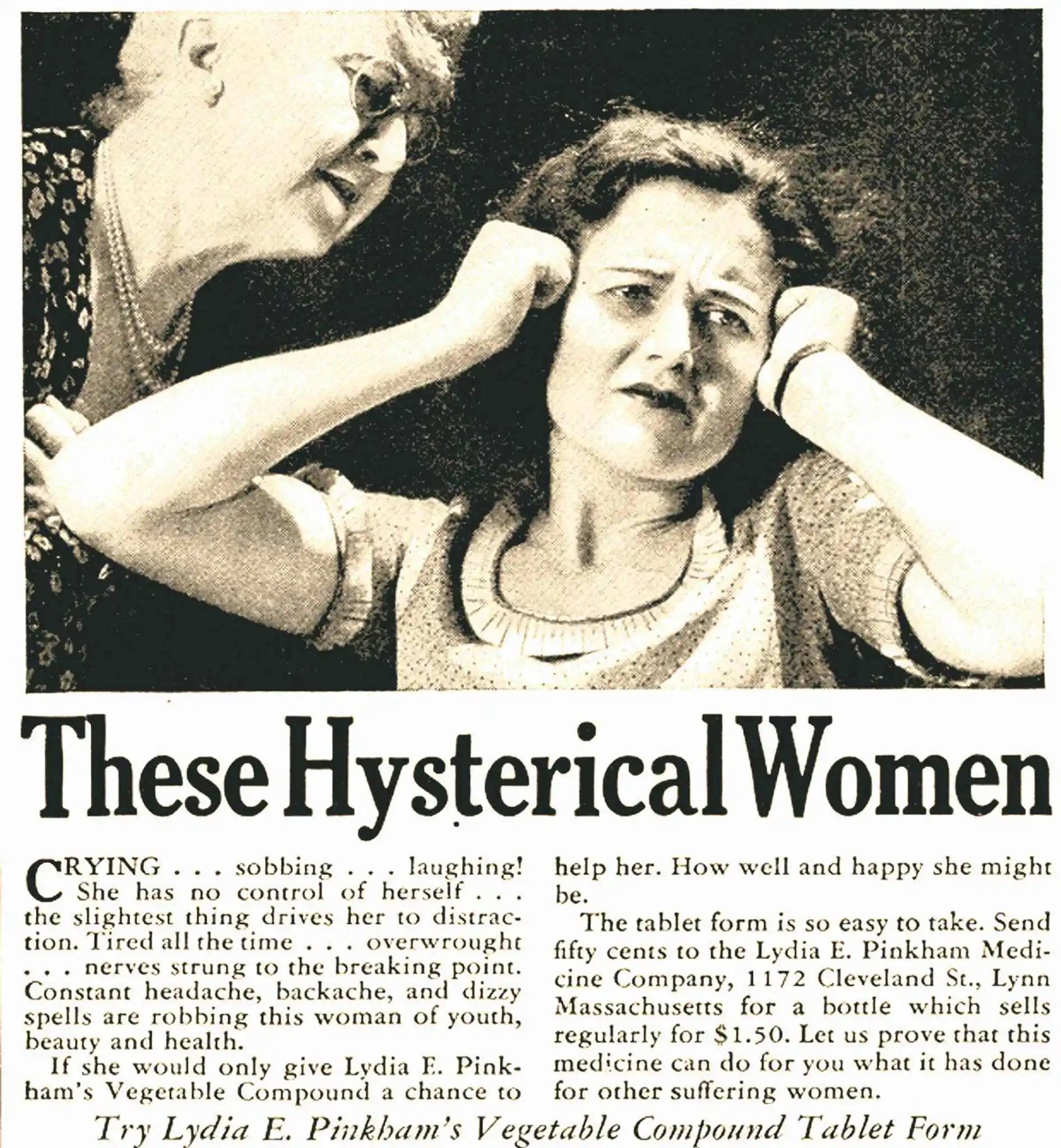
The artifacts below are historical advertisements and medical marketing from roughly the early-to-mid twentieth century. They are presented here as cultural evidence — not as endorsements. Each campaign reframed women’s exhaustion, anger, desire, and isolation as a personal defect to be dosed away, while leaving controlling partners and unequal labor unexamined. That misinformation did not invent NO BOYZ, but it greased the rails: it trained households, doctors, and patients to medicate the symptom and protect the source.
c. 1920s–1950s
Lysol for “feminine hygiene”
Lysol disinfectant
c. 1950s–1960s
“Now she can cook breakfast again”
Mornidine (pipamazine)
c. 1960s–1970s
Help her feel less anxious — don’t set her free
Serax (oxazepam)
c. 1950s–1960s
She can cook breakfast again
Mornidine (pipamazine)
c. 1960s–1970s
“I was boring my husband to death”
Vivarin
c. 1940
Stay fit and slim — by taking amphetamine
Amphetamine
c. mid-20th century
“Why is this woman tired?”
Dexedrine (dextroamphetamine)
1952
“Is your wife getting hysterical again?”
Calm-a-Lot tranquilizer tablets
late 19th–early 20th c. motif
Wandering womb / “medicinal” vibrator
Electric vibrator (“Fig. 1”)
early 20th century
“These hysterical women”
Lydia E. Pinkham’s Vegetable Compound
What the archive shows
- Gaslighting as careDistress is renamed hysteria, boredom, or hygiene failure so the woman doubts her own reading of the room.
- Control as prescriptionTranquilizers, stimulants, tonics, and “medicinal” devices keep her functional inside the same unequal structure.
- Epidemic coverWhen industry sells silence as wellness, NO BOYZ spreads with institutional blessing — harder to name, easier to catch.
Society education programs treat these ads as case studies in cultural transmission. Naming the propaganda is part of prevention: if the pitch is “fix her so he stays comfortable,” the correct clinical response is still contact suspension — not another bottle.
The real history behind the satire
How attitudes toward abuse have changed
The chronology above is satirical fiction. The real history of how societies have recognized and responded to abuse is its own story, and it is worth knowing. The shift below is real: from treating harm as a private family matter to naming it as a public-health and human-rights issue.
A private matter
For most of recorded history, violence and control inside the home were treated as private family matters rather than crimes. Legal doctrines in many cultures gave a husband authority over his wife that the state would not intervene in. The phrase “rule of thumb” is often (though inaccurately) linked to an old English allowance for “moderate correction”; whether or not that specific origin holds, the underlying norm — that a man’s home was his jurisdiction — was real and lasted well into the modern era.
Naming coercive control
The term “coercive control” was brought into wide use by the sociologist Evan Stark, whose work argued that domestic abuse is best understood not as a series of incidents but as a liberty crime — a pattern of subordination that deprives a person of rights and autonomy. This reframing changed how courts, police, and advocates think about abuse that leaves no bruise. England and Wales made coercive control a criminal offense in 2015, and several other jurisdictions have followed or are considering it.
From private to public health
The 1979 UN Convention on the Elimination of All Forms of Discrimination Against Women and the 1993 Declaration on the Elimination of Violence Against Women formally reclassified violence against women as a human-rights and public-health issue, not a domestic one. In the United States, the Violence Against Women Act of 1994 funded shelters, hotlines, and legal protections for the first time at federal scale. The #MeToo movement in 2017 surfaced the scale of unreported abuse across industries and brought the conversation into the open.
Where we are now
Recognition has expanded, but the patterns persist. Emotional abuse and coercive control remain underreported in part because they leave no physical evidence and in part because survivors are often not believed. The work of naming, preventing, and responding to abuse is ongoing — and it is the real work this satirical site exists to point toward.
A note on what is real here
The disease chronology, the NO BOYZ Society, and its members are invented satire. The section above is accurate. For real support, see the real help page.
Awareness is the oldest treatment we have
The Society's work continues. Learn to identify the condition, protect yourself, and find care.